Wednesday, 5 October 2011

The Netherlands- continued

Amsterdam
We had a smooth run from Den Haag to Amsterdam which took just under an hour. Our hotel Park Lane was easy to find and very pleasant. This time we were on the second floor, the first flight of stairs was OK, but the second flight was the ‘stairs of death’- very steep, shallow steps and a spiral near the bottom. These are typical of many Dutch buildings, the building is narrow, and the stairs are steep.
As this wasn’t our first visit to Amsterdam we took a more relaxed attitude to sightseeing. Our first day consisted of catching up with some friends for lunch and then spent the rest of the day with them. It was very pleasant and good to see them now they have a baby.
The following day we wandered around to familiarize ourselves with Amsterdam again. It attracts more tourists than Den Haag. The red light district and the cannabis cafes are more of a feature here. Again we caught up with our friends for lunch going across to north of the harbor which was a nice change of view.
Afterwards we took a short canal tour which was very interesting. Amsterdam is known as Venice of the north with its hundred canals and a thousand bridges. It was an extremely prosperous and important city in the 18th Century which went from nothing to nothing in about 100 years.
 For the first time since we left home it looked rain and it actually rained just as we got close to our hotel. The little café Smit & Voogt at the corner of our street turned out to be a great find and was definitely out of the tourist area as there was no English menu, the waiter was happy to translate for us.
Haarlam

Haarlem

The next day we left the city for Haarlem, the train conductor told us that the town is often used in films to depict Amsterdam. The market square is dominated by a magnificent church (aren’t they all). The construction of the present church was from 1370 to1538. There are many interesting features in the church, which incorporate the history of the town. A magnificent Christian Muller organ which consists of 5088 pipes and was almost 30 metres high was played by Handel and in 1766 by the 10 year old Mozart.

Leiden
Windmill at Leiden
We visited Leiden for the day, an old university town. It was unusual as it didn’t have the usual market square. There was a marked trail you can follow which takes in the various interesting points in the town.
The weather was perfect and as we wandered around we discovered the local market on the banks of the main canal. Here we had lunch sitting by the canal enjoying the passing parade of people soaking up the sun and atmosphere.
We visited the Franz Hals museum which was a small interesting gallery. Then off to the Leiden Museum which was both an art gallery and displayed information about the cloth manufacturing industry of the past.
Back in Amsterdam that evening we went to a wonderful small restaurant called ‘Marius’. The chef goes to the market everyday and chooses the freshest produce then cooks and 5 course market menu that night, so each day the meals will be different. The food was delicious and not heavy like so much of Dutch cooking .
On the last day we went to the Rembrant Haus. This house help bankrupt the artist as it cost him 130,000 guilders at the time and he had to borrow a great deal of money which eventually he was unable to pay back.
This museum had a range of paintings from various artists who worked in Rembrandt’s studio as well as some of Rembrandt’s work. The house and studio were set up as it would have been then and we had a demonstration as to how his etchings were done as well as information about the type of materials used.
We left Amsterdam that night for Vienna. 


Sunday, 2 October 2011

The Netherlands

The Hague
We arrived in Den Haag around 10 am from London via Rotterdam.  The first purchase was a map of the city, just so we could find our hotel. We seemed to take the long way round but finally arrived without too many detours. The hotel was small and simply presented. We were thankful they moved our room from the third floor to the first on our arrival as the spiral staircase was rather steep and carrying our cases up further than one floor would have sorely tested our stamina.
Peace Flame
We then went to explore the city. The Hague is one of the best kept secrets of tourism; it is a charming city that has much to offer. It is has its share of canals and 17th century classic Dutch buildings. It is the home of the Dutch Parliament, royal family and the international courts of justice Near the Justice Building is a perpetual flame for world peace which was sent from every continent this is surrounded by various stones from all the countries of the world, a very optimistic symbol.
We visited the Mauritshaus, a 17th century mansion which is now a museum full of old masters and includes some of Vermeer’s paintings of which one is Girl With a Pearl Earring. These smaller museums are often more satisfying than the large ones as you don’t become totally overwhelmed by the sheer quantity of paintings, You can spend more time really appreciating them.
Another interesting gallery is that of Prince Willem V which consists of a mass of paintings collected by him.
A typical view in The Hague
The Hague has the custom of high tea, even small cafes offer this. Two tier plates filled with cakes, pastries and sandwiches with a pot of tea. What a civilized way to while away an afternoon. There is definitely an air of wealth and refinement in this charming city
Delft
A day excursion to Delft was a 20 minute tram ride away. This was the centre of the Netherlands famous blue and white tiles and china. It is ironic that the blue and white ceramics from China inspired the original Delft ware and now all the cheap ‘Delft ware’ in tourist shops is imported from China. You can still buy Dutch produced Delft china but expect to pay a premium price.
In the centre of the town is the usual market square which is dominated by an imposing church called Nieuwe Kerk. A climb of over 350 steps to the top of the tower was worth for the spectacular view of the town.
Delft from church tower
As Vermeer lived in Delft it was only fitting they had a museum dedicated to him and his works. They had no original paintings only copies, however it was very interesting as it presented a lot of background about him and his works. There are only 37 paintings by Vermeer and three of those are disputed by experts. He wasn’t a prolific painter but as he had 16 children, that probably explains it.

Scheveningen
Kurhaus Hotel
A short tram ride takes you to vast beach area with a promenade along the shoreline which stretches from a fishing harbor at one end to grass covered dunes at the other. One glance along the shoreline you get the feeling that its Blackpool meets St. Kilda. There is a long pier which houses a casino and a bungee jumping platform. The only real refinement in the area is the Kurhaus Hotel with its 19th century elegance whose past guests included Winston Churchill and Igor Stravinsky. A ‘Who’s Who’ of entertainers have performed in the vast Kurzaal Room beneath the glittering chandeliers. We had to have a coffee in the café to suck in the elegance before we returned to the city.

Sunday, 25 September 2011

London - continued

Monday was taken up catching up with my cousin in Dagenham. Boy was it a long way out of London itself, by the time we left and headed back home it was early evening.
Regents Park
The next day we walked through Regents Park which still had beautiful roses in bloom and beds of colourful flowers even though it is autumn there. The park was started in 1812 and was designed by John Nash. There is a lake which attracts many water birds which also have breeding areas there .Queen Mary’s Garden was still a wonderful sight in autumn though must be spectacular in summer.
We then came to Regents canal, a tow path and followed that along to Little Venice, so called because a number of canal boats a moored along the banks. Many people actually live on the boats as they have a number plants, outdoor furniture and barbecues beside their craft on the land.

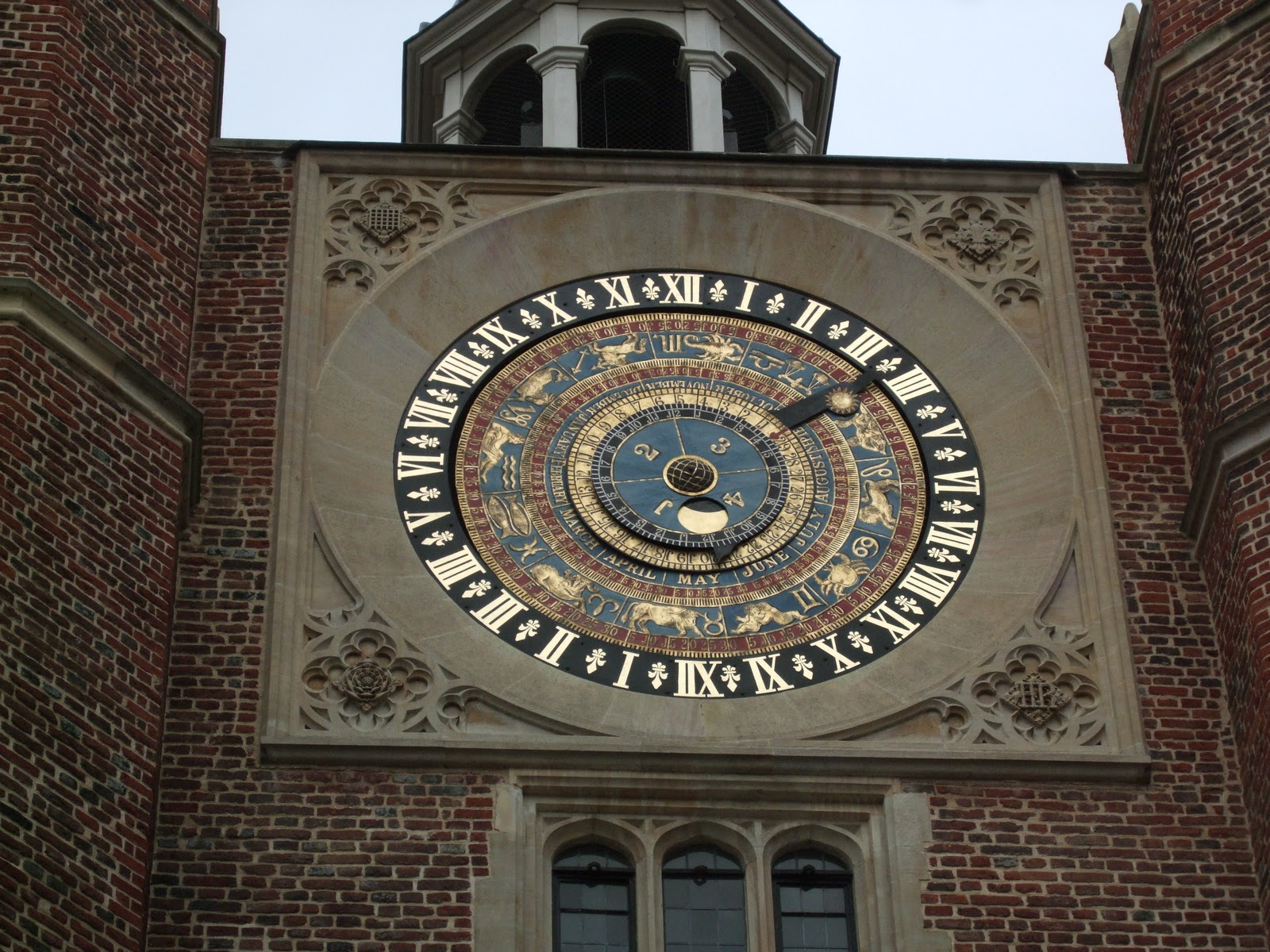
After lunch we decided to go out to Hampton Court. This was Cardinal Wolsey’s palace which was built in 1514 which was intended as his riverside home. He later offered it to King HenryVIII.
It is a magnificent piece of Tudor architecture, which includes a Renaissance picture gallery and the Royal Chapel with its Tudor pendant vaulted ceiling which is stunning.
Hampton Court
On the ground floor there is a huge kitchen and food preparation area. The main food seemed to be meat and more meat, about1200 oxen and 8000 sheep as well as slightly smaller quantities of pigs, poultry and deer were consumed per year. You certainly wouldn’t have wanted to be a vegetarian in Tudor times.  
Our last day was spent going out to Hampstead Heath. Actually the town of Hampstead itself was quite delightful and we enjoyed wandering around it for a while. We then walked to Kenwood House taking in a brief walk through the heath, as it is huge and you would need a whole day just to wander many of the paths.
Kenwood House
Kenwood House is a beautiful old house which is filled with many paintings, including those of Vermeer, Turner, Rembrandt and Reynolds. I think some of these small galleries are often nicer as there is a wide variety of works without the huge numbers as in the large galleries, which can tend to be overwhelming.

Friday, 23 September 2011

London

Five days in London went very quickly. We were able to stay with at a friend’s flat which overlooked Primrose Hill Park which is next to Regents Park. We would sit in the lounge having our breakfast watching the passing parade of people walking their dogs, joggers using the hill for a good workout as well as those off to work.
We were lucky with the weather as it remained fine and mild while we were there. On our first day we went to Portobello Road which is famous for its antique wares and market. We enjoyed fossicking around but purchased nothing.
Royal Geographical Society
As it was Open House weekend many buildings became open to the public. We decided to go to the Royal Geographic Society. We had a very interesting talk and some of the artifacts which they have were on display. These included Stanley and Livingstone’s hats, a hand drawn map by T.E. Lawrence (Lawrence of Arabia), a watch of Mallory who made one of the first attempts on Everest and died in the process. His body was only discovered recently. There were some water colour sketches by Samuel Baker as well as his rifle, shopping lists for expeditions. These people were once again brought to life.
The building with its dark wood panelled walls, meeting room and library reflects the gentleman’s club that it was of old. It now houses a great collection of maps, artifacts, documents and books. It is a private organization and gets no government support. Anyone for a small fee can access to these for research.
The following day saw us go to two more buildings, the first being the Bank of England. This is a very popular building to visit as there was a long line had developed early in the morning. The building is Huge and takes up a whole block. The Bank of England as such from 1694, in 1734 it moved to Threadneedle Street and was the first purpose built bank in Britain.
The rooms are magnificent the corridors have beautiful mosaic floors; the cantilever staircase is reputed to be the longest of its type in Europe. There is also a Garden Court which was originally the churchyard of St. Christopher-le-Stocks.
Apothecaries Guild Hall
No expense was spared initially and this can be seen in the various rooms that have kept their original decorations and furnishings.
The Grocers and Apothecaries Guild is the oldest guild in London the origins being traced back to the Guild of Pepperers in 1180. Eventually the London Apothecaries agitated to break away from the Grocers because of their specialist skills and eventually succeeded in 1617.
The society was involved in regulating the medical profession and examinations. The building is constructed around a courtyard and houses many treasures which it have been given to the Society over the years.
Our first two days were thoroughly enjoyable and interesting. 

Wednesday, 31 August 2011

Visiting

I was working in Deyang a small provincial city about 60kms north of Chengdu in the Sichuan province. I enjoy teaching in China which offers a way of interacting with the people in a way that doesn’t always happen as a tourist.
One of the students was very keen for me to visit his family because,
 “They have never met a foreigner before.”
I thought it would be great opportunity to visit a family in the countryside and experience the ‘real’ China.
 His aunt and uncle work on the farm, his mother & another uncle would be there as well as numerous relations. We took a small bus from just outside the major bus station and before long we were out in the countryside. The area was typical of rural China , quite poor  small hole in the wall shops selling groceries and small ‘Tea Houses’ with tables on the roadside where the men gather to play cards and mah jong.  We walked along a path that wended its way through the green rice fields which felt strangely silent. It was unusual to be somewhere that was actually quiet, not a common experience in China.

The host family and wonderful meal

The student was the interpreter as my Chinese amounted to about half dozen words. I must admit I felt a bit like a zoo exhibit, but they were more than hospitable and of course they cooked up a magnificent banquet in a very minimalist kitchen. Then there was the usual round of photos.  They praised and honored me as their esteemed guest with beer and Chinese rice wine (made locally!) which we all had to drink liberally with hearty ‘Gambeis!’
I actually sipped the rice wine instead of sculling it, as it really is a whisky in strength. Of course his mother kept putting tasty tidbits in my bowl, though chicken & duck feet didn’t exactly excite me, but I had a nibble, not wanting to offend.
 During the course of the day my escort said to me that if I needed to go to the toilet, mention it to him and his mother would take me. As the day dragged on and numerous drinks had been partaken, I needed to use the toilet. So saying to him, his mother then gave me some toilet paper and took me to a barn like structure at the back of the house. The hole in the ground with two wooden slats over them was what could be expected, however, usually when one takes someone to the toilet one either turns away or goes out of the room. Did this happen?  No. There she stood watching me go, I’m sure it was because she was curious in seeing if a foreigner ‘pee-ed’ the same as a Chinese.

Monday, 8 August 2011

Not Another Tour

I have a great aversion for guided tours, not that I have been on any extended ones, just the odd day trip. The idea of being herded around in a group for days on end just goes against the whole idea of travel in my mind.

There are tours that advertise sixteen European countries in 20 days, the mind boggles, it would be the case if it was Tuesday it must have been France. You would see a lot and experience nothing. Just tick off the iconic sites. Seen the Eiffel Tower tick, seen the Arc de Triomphe tick, an hour in the Louvre, seen the Mona Lisa tick and so on it goes. If you are lucky you will have a free afternoon to explore but with such an itinerary and the amount of time you would need traveling you would probably be too exhausted to enjoy a leisurely stroll anywhere other than to your hotel room to recover.

Where’s the fun of wandering around the streets discovering some out of the way place for yourself, spending a leisurely day in the museum or art gallery, lingering over lunch and heaven forbid interacting with the locals, not just the ones paid to look after and entertain you.

I am aware that many people enjoy guided tours but for me the idea of being stuck with 20 or 30 people day in and day out herded like cattle just wouldn’t do. What if there are some people in your group that are totally obnoxious or inconsiderate.  Or have someone ask an inane question or complain about the food not being like back home or some other thing and my patience would be stretched to breaking point. This would be the reason I wouldn’t make a good tour guide, the thought of going on tours herding 20 to 30 people for a living makes be shudder. As far as I’m concerned if people want things exactly like they have at home, then stay home don’t even think about travel even on a tour.

As a free spirit you have time to explore and get to absorb the atmosphere of different places you visit. You stay longer in each place maybe ‘see’ less but feel and enjoy more. This way you won’t see 16 countries in 20 days but travel isn’t just about ticking off the iconic must see sites in as many destinations that is humanly possible in the shortest time.

A Quote

" We fear things in proportion to our ignorance of them"
                                          
                                                                                                                               Livy